
How a Volunteer Science Team Took On a Climate Course
This is the story of how a small, unpaid group of scientists in Canada decided to check a university climate course, and what happened when they published what they found. The report itself is a separate read, and we break it down on its own page. Here we want the human version: who took it on, how it landed, and the fight that came after.
A Group That Did This for Free
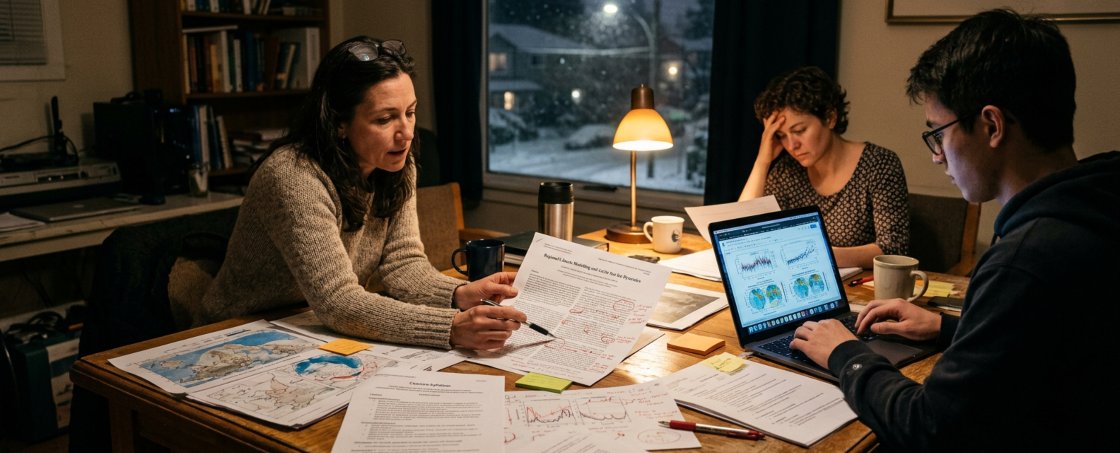
The team called itself the Committee for the Advancement of Scientific Skepticism, a volunteer working group inside the Centre for Inquiry Canada. No staff, no budget, no press office. What it had was a panel of researchers and enthusiasts who were willing to spend evenings on the kind of slow checking that nobody pays for. When a course at a respected university started teaching climate denial to second-year students, they decided it was worth the hours.
The Course and the Man Teaching It
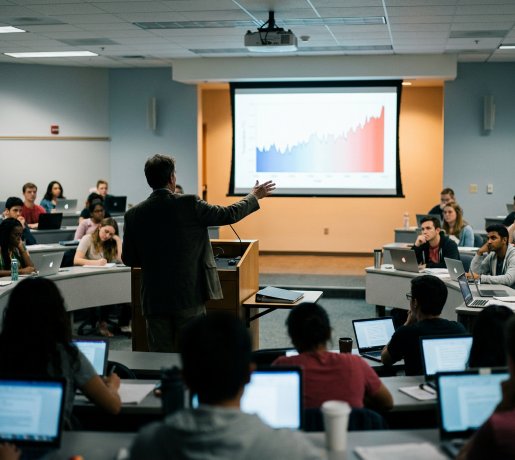
The course was ERTH 2402, an earth-sciences elective at Carleton University in Ottawa, aimed mostly at students who were not science majors. From 2009 it was taught by Tom Harris. On paper that sounds ordinary. In practice it was the detail that made the story.
Harris was not a climate researcher. He trained as an engineer and made his career in public relations, including work for a firm that ran campaigns for the oil and energy industry. He also ran the International Climate Science Coalition and was listed as an expert by the Heartland Institute, a US group with a long record of disputing mainstream climate science. So, the person framing the science for a room full of beginners had spent years arguing one side of it for a living.
How the Story Broke
Timing gave the report a push. In the middle of February 2012, a set of internal Heartland Institute strategy documents leaked and made headlines, including plans to shape how climate change gets taught in schools. Days later, on 28 February, the team released its report on a Heartland-linked instructor doing exactly that at a Canadian university. The two stories fit together, and the coverage came fast.
| Where it landed | What they focused on |
|---|---|
| CBC | National pickup of the report and its claims |
| Maclean’s | The course and the man teaching it |
| Grist, Inside Climate News | The Heartland and think-tank connection |
| DeSmog | The wider advocacy network around the course |
One small detail says a lot about how the story travelled. At least one outlet called Harris a “professor.” He was a contract instructor, and his critics were quick to correct it, because the title carried more authority than the role did.
The Pushback
Harris rejected the report. He called its findings unsupported and at times mistaken, and he argued that going after his course was really an attack on academic freedom. That argument deserves to be taken seriously, and the team did take it on directly.
Their answer was narrow. Academic freedom protects an instructor’s right to hold and teach an unpopular view, and they said as much. It does not turn a one-sided course for beginners, taught with almost no primary research, into a fair presentation of a settled field. Carleton, for its part, framed the choice of material as academic freedom and noted that the course was not part of its usual rotation.
What Happened Next
The course did not run again in the form the team examined. The broader worry the report pointed at, organised efforts to shape how climate science reaches students, has stayed a live subject for journalists and researchers ever since.
| When | What happened |
|---|---|
| 2009 | Harris takes over the Carleton course |
| 2010 to 2011 | The team audits about 27 hours of lectures |
| mid-Feb 2012 | Heartland strategy documents leak |
| 28 Feb 2012 | CASS releases its report |
| 2014 | CASS folds into the Centre for Inquiry Canada board |
As for the team, it wound down as a separate group in 2014, when its work moved into the board of the Centre for Inquiry Canada. The report is the clearest thing it left behind: not an argument won by shouting, but a slow, sourced check of a public claim, published where anyone could read it.
Want the report itself?
This page is the story. For what the 98-page report actually says, claim by claim, see what the 98-page report actually says.
SOURCES AND FURTHER READING
- Climate Change Denial in the Classroom, the original CASS report (PDF via the Internet Archive).
- CBC News, Maclean’s, Grist, Inside Climate News and DeSmog, for the 2012 coverage.
- Centre for Inquiry Canada. centreforinquiry.ca
Disclaimer: This is an independent informational article about a publicly released report. It is not affiliated with the Committee for the Advancement of Scientific Skepticism (CASS) or the Centre for Inquiry Canada. Funding figures are drawn from the report itself and attributed as such. The original report and the news coverage are linked so readers can check the sources.