
The Science of Seeing Patterns: Why We Find Order in Randomness
Our brains are pattern-detection machines. That kept us alive: spotting a predator, reading the seasons. But that same system also tricks us into seeing meaning where there is none.
Eight heads on a coin toss. Last week’s lottery number feels less likely. A slot machine that just paid out feels due. None of this matches probability. These are cognitive biases, studied for decades, that explain our worst decisions when facing randomness.
We are wired to find patterns, even when there is nothing there to find.
Our Brains Are Built to Find Patterns
Pattern recognition gave us an edge. Early humans who could read the signs of a storm, the trail of prey, or the warning calls of other animals were more likely to survive and pass on their genes. This was a feature, not a flaw.
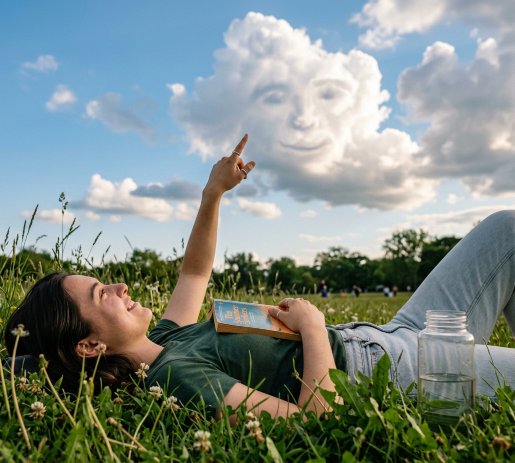
The trouble is that the same system produces false positives. We see faces in clouds, hear voices in static, and find links between unrelated events. Psychology has a name for it: apophenia, the perception of meaningful patterns where none exist. It is not a sign that something is wrong with you. It is a basic part of how human cognition works, and recent research even ties pattern-seeking to the openness side of personality. We are, quite literally, built to find patterns, even when there is nothing to find.
When Randomness Looks Meaningful
Randomness is surprisingly hard for us to read. People consistently rate a sequence with lots of alternation, like heads-tails-heads-tails, as more random than a sequence with a run like heads-heads-heads-tails-tails, even though a fair process makes both equally likely. A few everyday cases show the pattern.
| Everyday case | Why it fools us |
|---|---|
| Coin tosses | Every four-flip sequence is equally likely, runs included |
| Dice | Each roll is independent of the one before it |
| Lottery numbers | Recent winners feel “used up,” which they are not |
| Stock charts | Random noise given a tidy name and a story |
Common Cognitive Traps
The research has names for the specific ways our brains misread randomness. Four do most of the damage.
| The trap | What it is |
|---|---|
| Gambler’s fallacy | A recent outcome feels less likely to repeat |
| Hot hand fallacy | A recent win feels likely to keep going |
| Confirmation bias | We notice the hits and forget the misses |
| Apophenia | We tie unrelated events into one story |
These are not just lab curiosities. A 2024 study using player-level data from Haiti and Denmark found that the average lottery player commits the gambler’s fallacy, avoiding numbers that recently won. A small group does the opposite and chases recent winners, the hot hand. The hot hand is still debated in sports, where skill plays a part, but in games of pure chance it is plainly a fallacy.
Why This Matters, in Science and Daily Life
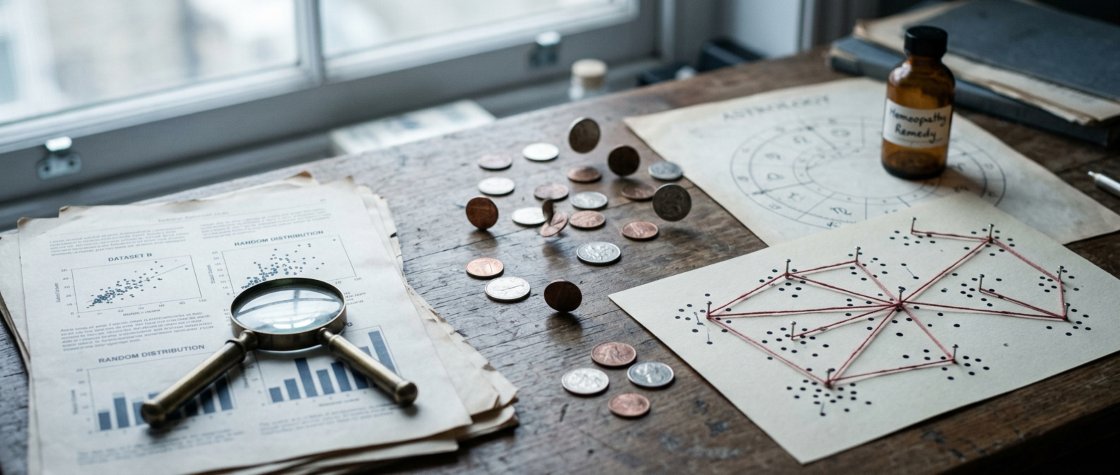
The cost of misreading randomness goes well beyond the casino. In medicine, people drop effective treatments because a cold that would have cleared up anyway becomes proof that a homeopathic remedy worked. In public health, people reject vaccines because they mistake timing for cause.
Pseudoscience thrives on this confusion. Astrology, alternative medicine, and psychic readings lean on our willingness to see patterns in random events, remembering the hits and forgetting the misses. Conspiracy theories weave coincidences into stories that feel too neat to be accidental. Research (2018) found that random outcomes often look systematic, which is exactly why we have to train ourselves to spot them.
Randomness in Online Casinos
Online gambling in Canada is large and growing, and its platforms are designed around the very biases above.
| Online gambling in Canada | Figure (per the sources) |
|---|---|
| 2024 market revenue | About $3.9 billion |
| Projected by 2030 | About $8.7 billion |
| Ontario, second year | $2.4 billion, up 71% |
| Adults who have gambled (2025) | About 73% |
| Problem gamblers among them | About 1 in 10 |
| Online gamblers 18 to 29 with high harm | 23.5% |
Why streaks happen on their own. In any random sequence, runs are inevitable. Flip a coin a hundred times and you are almost certain to see five or more heads in a row. Slot machines, roulette wheels, and lottery draws are no different. A streak is not a sign that something is working. It is a statistical certainty over enough trials.
Why a machine feels “due.” After a long losing run, players talk themselves into a win being overdue. Each spin is independent. The machine has no memory and does not know it has been losing.
Why spotting a pattern does not predict the next result. In a truly random process, past outcomes tell you nothing about future ones. A 2023 analysis of hundreds of millions of lottery entries found the gambler’s fallacy faded over time, while the hot hand bias, though small, stayed remarkably steady for years. People keep making the same mistake even when the data says they are wrong.
The harm is real. People who gamble online are far more likely to meet the criteria for problem gambling than those who only play the lottery, and among young online gamblers the rate of serious harm, from lost savings to credit card debt, is high. None of this needs a moral panic. It needs the same clear eye we bring to any other claim about cause and effect.
Learning to Think More Critically
The good part is that these biases are not destiny. Once you know they are there, you can guard against them.
Ask for evidence. Before you accept a claim, a hot machine, a miracle cure, a conspiracy, ask to see the data. Where did it come from, how was it collected, and what would prove it wrong?
Separate coincidence from cause. Two things happening close together does not mean one caused the other. This is the most common error in everyday reasoning.
Understand the odds. A run of five heads is not remarkable. A number that won last week is not less likely to win again. A machine that has been losing is not due. These are not opinions, they are facts about probability.
The scientific skeptic’s method, ask what evidence backs a claim, whether it could be shown wrong, and whether anyone else gets the same result, is a strong antidote to the pattern-seeking that leads us astray. It does not take a statistics degree, just the patience to slow down and ask: is this real, or am I seeing what I want to see?
If gambling is causing harm
If you or someone you know is struggling, help is available through the Canadian Centre on Substance Use and Addiction and local support services. There is no shame in asking.
SOURCES AND FURTHER READING
- Research on apophenia and pattern-seeking as part of the openness side of personality.
- Lottery studies on the gambler’s fallacy and hot hand bias using player data from Haiti and Denmark (2023 to 2024).
- Mental Health Research Canada, 2025, on gambling participation and gambling-related harm.
- Research from 2018 on how genuinely random outcomes can still look like the product of a system.
Disclaimer: This is an independent informational article. It is not affiliated with any gambling organization and is not financial or medical advice. If you or someone you know is struggling with gambling, help is available through the Canadian Centre on Substance Use and Addiction and local support services.